Quantum World Ventures · R&D Division · Quantum Fintech

Quantum Fintech R&D — Securing and Scaling India's Financial Backbone

Every rupee of a government subsidy, pension or scholarship in India now moves through the Public Financial Management System (PFMS) and Integrated Financial Management System (IFMS). These systems already move transactions at extraordinary scale — and the technology securing and routing them was built for a pre-quantum, pre-AI-fraud world. Quantum World Ventures is building the AI and quantum research programme to change that, led by Santosh Talaghatti's own experience as a researcher and contributor to government IFMS deployments.

R&D DivisionArea of Research: Fintech
FocusPFMS & IFMS Systems
Grounded inReal IFMS Research
ApproachAI + Quantum, Hybrid
0Quantum Fintech Research Areas
0Transaction-Scale Challenges Mapped
0National Systems in Scope — PFMS & IFMS
0R&D Division Research Areas
Our R&D Division

Fintech Is Now a Core Area of Our Research Programme

Quantum World Ventures' R&D Division carries quantum and AI research from lab to deployment across four areas — MedTech, EdTech, PoliceTech and now Fintech. Each area has its own dedicated lab or initiative, and each feeds the same underlying quantum-AI research infrastructure.

// Why This Initiative Exists

Built on Applied Research Inside India's IFMS

Santosh Talaghatti has worked directly within the machinery of government financial systems — as a researcher of the Integrated Financial Management System (IFMS) and a contributor to IFMS deployments for state governments. Quantum Fintech R&D is built on that direct working knowledge of how PFMS and IFMS actually operate, rather than a general-purpose theory of applying quantum computing to banking.

The programme's research agenda follows directly from that experience: transaction volumes that will continue to outgrow classical infrastructure, encryption standards with a defined shelf life against quantum decryption, and fraud-detection cycles that currently run on a delay measured in audit periods rather than transactions.

  • Grounded in direct research and government IFMS deployment experience
  • Scoped to serve PFMS, state IFMS platforms, and the banks and treasuries connected to them
  • One of four research areas inside Quantum World Ventures' R&D Division
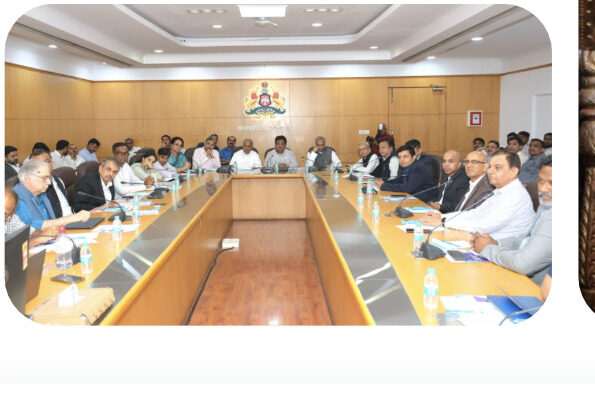
Government financial systems engagement — the foundation of Quantum World Ventures' Quantum Fintech R&D initiative
The Real Problem

Current Challenges in Large-Scale Fintech Transactions

PFMS and IFMS were built to digitise government finance. They succeeded — and in doing so, inherited a new generation of problems that classical architecture alone cannot solve.

🔓
01 · ENCRYPTION RISK

The "Harvest Now, Decrypt Later" Threat

Transaction and beneficiary data encrypted today with RSA or ECC can be intercepted and stored now, then decrypted once quantum computers mature — a live risk for any financial data with a multi-year shelf life.

🐌
02 · SCALE & LATENCY

Volume That Strains Classical Infrastructure

Crores of DBT, subsidy and pension transactions move through PFMS every cycle. Peak-load batch settlement and reconciliation windows are already tight — and demand keeps growing faster than classical compute capacity.

🕵️
03 · FRAUD DETECTION LAG

Fraud That Outpaces Manual Audit

Duplicate beneficiaries, ghost accounts and diversion patterns are often caught only after disbursement, in periodic audits — not in real time, when it would actually stop the leakage.

🧩
04 · DATA FRAGMENTATION

Ministries, States and Treasuries, Disconnected

PFMS, state IFMS platforms, bank rails and scheme databases each hold a partial picture. Reconciliation across them is manual, slow, and a genuine source of delay and error.

📜
05 · AUDITABILITY

Public Money Demands Explainable Systems

Any AI applied to public fund disbursement must be auditable and explainable to Parliament, CAG and citizens alike — a black-box model is not an acceptable answer, however accurate.

🌾
06 · LAST-MILE INCLUSION

The Rural Disbursement Gap

Connectivity, language and digital-literacy constraints in rural areas measurably reduce the reliability of last-mile disbursement, independent of how well the core PFMS/IFMS infrastructure performs.

Five Research Areas

How Fintech Can Adopt AI and Quantum Technology

Five concrete research areas where quantum and AI technology can be engineered directly into PFMS, IFMS and the systems around them.

Post-quantum cryptography for PFMS and IFMS data security
🔐
01 · CRYPTOGRAPHY

Post-Quantum & Quantum-Safe Cryptography

Migrating PFMS and IFMS data-in-transit and at-rest to quantum-resistant encryption standards, with pilot Quantum Key Distribution (QKD) links for the most sensitive treasury networks.

AI-quantum hybrid fraud detection for government financial systems
🕵️
02 · FRAUD DETECTION

AI-Quantum Hybrid Fraud & Anomaly Detection

Real-time hybrid models trained to flag duplicate beneficiaries, ghost accounts and diversion patterns as transactions happen — not weeks later in an audit report.

Quantum-optimised transaction routing and settlement
⚛️
03 · OPTIMISATION

Quantum-Optimised Routing & Settlement

Quantum annealing and hybrid optimisation techniques applied to high-volume batch settlement and reconciliation across treasury, bank and scheme databases.

Secure federated financial data infrastructure across government systems
🔗
04 · DATA INFRASTRUCTURE

Federated Financial Intelligence

Privacy-preserving federated learning that lets ministries, states and banks collaborate on fraud and analytics models without ever centralising raw citizen financial data.

AI for financial inclusion and last-mile rural disbursement
🌾
05 · INCLUSION

AI for Financial Inclusion

Vernacular AI assistance, predictive welfare targeting and last-mile disbursement intelligence — making sure the citizens who need a payment most are the least likely to be left behind.

🌐
06 · ACROSS ALL FIVE

One Research Programme

Every area above shares the same discipline as the rest of our R&D Division — governance-first design, auditability by default, and a bench-to-deployment pipeline built for real institutions.

// The PFMS & IFMS Opportunity

An Open Invitation to Government & Financial Institutions

PFMS and IFMS were built as national infrastructure — and modernising them responsibly is not a task for any single vendor working alone. Quantum World Ventures invites central and state government finance departments, PFMS/IFMS technology partners, public sector banks and financial regulators to engage with this research directly, through pilot programmes, joint research, or technology consulting.

  • Pilot quantum-safe cryptography programmes for specific PFMS/IFMS data flows
  • Joint research on AI-quantum fraud detection with real, anonymised transaction patterns
  • Technology consulting for institutions planning their own quantum-readiness roadmap
Quantum-secure financial infrastructure — the PFMS and IFMS opportunity
Start a Conversation

Engage With Quantum Fintech R&D

For government finance departments, PFMS/IFMS technology partners, banks and researchers interested in this initiative.

Our R&D team reviews every enquiry personally. Questions first? Email info@quantumworld.in

Enquiry Received

Thank you for your interest in Quantum Fintech R&D — our team will review your enquiry and reach out with next steps.

Research Programme

Building the Quantum-Safe Backbone for India's Financial Systems

Quantum Fintech R&D applies quantum-safe cryptography, AI-quantum fraud detection and optimisation research directly to PFMS, IFMS and the institutions connected to them — engineered to be auditable and deployable, not experimental for its own sake.

Grounded in Applied IFMS Research Governance-First, Audit-Ready One of Four R&D Division Areas
Visionary's Vision — On Quantum Fintech
"Fintech research is incomplete if it cannot secure a transaction end-to-end — from encryption, through detection, to settlement and audit. That is the standard this research area is held to." — Santosh Talaghatti, Founder & CEO, Quantum World Ventures